Back


Job Detail

Development and validation of an interoperable annotation framework for nonlinear ultrasonic skin data

IEEE Industry Engagement Committee (IEC)

Blois, Loir-et-Cher

Development and validation of an interoperable annotation framework for nonlinear ultrasonic skin data

IEEE Industry Engagement Committee (IEC)

Blois, Loir-et-Cher
 
Number Of Vacancies: 1
 
Country: France
 

Context of the work :

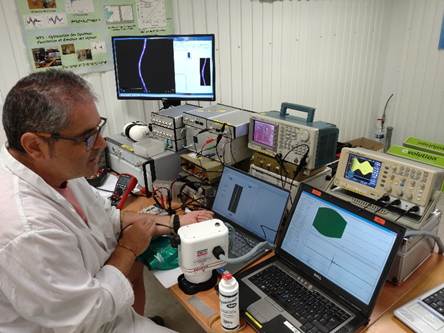
The TRNEWS ultrasonic platform developed at INSA Centre Val de Loire enables the acquisition of nonlinear ultrasonic signatures from soft biological tissues using advanced excitation schemes such as quaternion-coded signals[1]. These experiments, applied to skin imaging, are designed to quantify nonclassical nonlinearities linked to structural changes in biological tissues.
Une image contenant intérieur, texte, personne, Ordinateur personnelLe contenu généré par l’IA peut être incorrect.

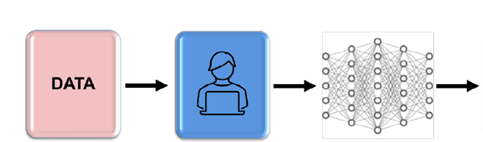
In the DICA#UP project, a major challenge is the lack of interoperability between heterogeneous ultrasonic datasets and metadata formats (proprietary TRNEWS descriptors, experimental context, acquisition parameters, etc.) as identified in the project description. This lack of standardization makes it difficult to compare experiments, automate the analysis pipeline, or feed machine learning algorithms.

Une image contenant capture d’écran, diagramme, conceptionLe contenu généré par l’IA peut être incorrect.Une image contenant étagère, Rayonnage, Publication, collectionLe contenu généré par l’IA peut être incorrect.


The present internship focuses on the processing and modelling of nonlinear ultrasonic data, and on the construction of an interoperable annotation dictionary compatible with DICONDE-like structures. The goal is to formalize the signal-processing workflow and enable standardized annotation of advanced ultrasonic experiments on skin.

Experiments to be analysed include:

  • nonlinear TRNEWS excitations based on quaternionic coding,
  • calibration procedures using V3 blocks,
  • imaging experiments on synthetic and biological skin models, used in cosmetic and bioengineering applications.

It is therefore necessary to develop tools allowing (i) the analysis of the experimental results obtained with the trained models as well as (ii) the annotation of the acousto-mechanical metadata and ultrasonic images.

Previous research in the team has shown that automatic classifiers using information-divergence based approaches [1-3] are more efficient for remote health monitoring and diagnosing suspects. 

Objectives: 

  • Signal processing and nonlinear signature extraction from TRNEWS experiments (time reversal focusing, harmonic content analysis, memory effects, PMspace projection, etc.).
  • Identification of relevant acoustomechanical metadata for annotation (experimental context, boundary conditions, excitation type, mechanical loading, acquisition chain).
  • Design of an interoperable annotation dictionary (DICA#UP) derived from:
    • TRNEWS metadata structure,
    • DICONDElike standards for nondestructive evaluation,
    • Ontological models described in the project’s Lot 2 (semantic interoperability)
  • Validation of the dictionary by annotating representative calibration and skin experiments
  • Implementation of a prototype annotation tool


References :

[1] S. Dos Santos, M. Maslouhi, and K. A. Okoudjou, Recent Advances in Mathematics and Technology (Applied and Numerical Harmonic Analysis), Springer Nature, 2019. https://www.springer.com/gp/book/9783030352011 

[2] C. Kozena, V. Kus and S. Dos Santos, "Hysteresis and memory effects in skin aging using PM space density identification," 2016 15th IEEE BEC, 2016, pp. 179-182, doi: 10.1109/BEC.2016.7743758 .

[3] Dos Santos, S., Farova, Z., Kus, V., & Prevorovsky, Z. (2012, May). Echodentography based on nonlinear time reversal tomography: Ultrasonic nonlinear signature identification. In AIP Conference Proceedings (Vol. 1433, No. 1, pp. 203-206). American Institute of Physics.


Profile :

The student should have a strong motivation on research domain such as bioengineering, computational simulation and modelling. The intern should be proficient in modelling and programming in different languages such as C, Java, Matlab, and Python. In addition to programming skills, knowledge of the basics of image processing is highly desirable. Intern should have good written and verbal communication skills and enjoy working in a multi thematic team. Good English language skills are required.


Starting period : Spring Semester 2025-2026


Supervisors :

INSA Centre Val de Loire, serge.dossantos@insa-cvl.fr

INSA Lyon, frederique.biennier@insa-lyon.fr


The monthly gratuity will be paid according to the French law : 

(https://www.service-public.fr/particuliers/vosdroits/F32131 )

About IEEE Industry Engagement Committee (IEC)


The IEEE Industry Engagement Committee (IEC) is a strategic body reporting to the Board of Directors, focused on strengthening connections between IEEE and industry, government, and technical professionals. Formed in 2018, it enhances IEEE's relevance through industry-focused products, services, events (webinars, panels), and by supporting career growth. 
Key Aspects of the IEEE Industry Engagement Committee:
  • Mission & Focus: The committee aligns IEEE's strategic goals with industry needs, aiming to bridge technical communities with corporate partners. It focuses on three main pillars: strengthening value for industry members, supporting student-to-workforce transitions, and facilitating collaboration between IEEE Societies, Technical Councils, and industry.
  • Structure & Leadership: The IEC coordinates with all major IEEE Organizational Units (OUs) and brings together representatives from over 30 Societies and Technical Councils. It also works through regional, such as Region 4, and technical society-specific committees, such as the IEEE UFFC.
  • Activities & Initiatives: The committee initiates activities like:
    • Industry-focused programming: Organizing webinars, conferences, and roundtables.
    • Strategic guidance: Providing resources and guidelines for industry engagement.
    • Technology awareness: Supporting outreach, such as robotics workshops for students.
    • Career development: Helping industry members grow their careers and facilitating connections.
  • Impact: The IEC helps to ensure that industry perspectives are included in research and technology development, ultimately fostering a thriving workforce. 
For more information, you can visit the official IEEE Industry Engagement Committee page. 

https://industry.ieee.org/